

What Does Yerba Mate Taste Like? An Honest Description Before Your First Cup

This is the question everyone asks before their first cup and it deserves an honest answer rather than a vague one.
Most descriptions of yerba mate taste either oversell it as something magical or undersell it as something challenging. The truth is more nuanced than either and understanding it properly before you try the drink will make your first experience significantly better than going in blind.
Here is a complete, straightforward description of what yerba mate actually tastes like, why it tastes that way, how different versions compare, and what to expect if you are coming to it from coffee, green tea, or energy drinks.
The Honest Flavour Profile of Yerba Mate
Plain traditional yerba mate has a flavour that is earthy, robust, slightly grassy, and bitter with a dry finish. It shares some characteristics with strong green tea but is deeper, more intense, and considerably more complex. There is a natural astringency from the tannins and polyphenols in the leaf that coats the palate in a way that is not unpleasant once you are accustomed to it but can be surprising on the first cup if you are expecting something mild.
The bitterness in yerba mate is real and it is worth acknowledging upfront rather than glossing over. It comes from the combination of caffeine, tannins, and saponins naturally present in the Ilex paraguariensis plant. These are the same compounds responsible for the health benefits the drink delivers. The bitterness and the benefit come from the same source.
For most new drinkers the honest experience of plain yerba mate on the first cup falls somewhere on a spectrum. Some people love it immediately. Others find it takes two or three cups before the flavour stops feeling unfamiliar and starts feeling genuinely good. Very few people remain indifferent to it for long. It is a drink with real character and character tends to grow on you.
Why Does Yerba Mate Taste Bitter
The bitterness in yerba mate is one of the most commonly asked about aspects of the flavour and understanding where it comes from makes it much easier to manage.
Three compounds are primarily responsible. Caffeine itself is inherently bitter, which is why coffee, tea, and all naturally caffeinated drinks share some degree of bitterness. Tannins, the same polyphenolic compounds found in red wine and strong black tea, create the dry, astringent sensation on the palate. Saponins, natural plant compounds with foam-producing and anti-inflammatory properties, add a slightly sharp, vegetal edge to the overall profile.
The good news is that bitterness in yerba mate is directly manageable through preparation. The two most common mistakes that make yerba mate unnecessarily bitter are using water that is too hot and using too much leaf. Water above 80 degrees Celsius over-extracts the bitter compounds and produces a harsher cup than the same leaves brewed correctly. Keeping water between 70 and 80 degrees, just below the point where steam rises steadily from the surface, produces a noticeably smoother, less aggressive flavour without reducing the energy effect.
Does Yerba Mate Taste Like Coffee
No. The two drinks are botanically unrelated and taste completely different from each other.
Coffee has a roasted, deep, dark bitterness that comes from the Maillard reaction during the roasting process. The bitterness in yerba mate is vegetal and herbaceous rather than roasted. Coffee has almost no astringency. Yerba mate has a dry, tannin-driven finish that coats the palate distinctly.
The shared characteristic is bitterness in a general sense and the fact that both contain meaningful caffeine. Beyond those two points the flavour experience diverges completely. Someone who dislikes coffee specifically because of the roasted flavour often finds yerba mate considerably easier to enjoy. Someone who loves the roasted depth of coffee may find plain yerba mate feels too green and vegetal initially.
What yerba mate shares with coffee is the functional role it plays in a daily routine rather than the taste. It is a morning drink, a focus drink, a ritual drink. The experience of sitting with a cup of yerba mate and feeling alert and grounded is very similar to the experience coffee drinkers describe, even though the flavour that accompanies that state is entirely different.
Does Yerba Mate Taste Like Green Tea
Closer than coffee but still distinctly different. Both come from leaves brewed in hot water. Both have a vegetal, grassy quality. Both are bitter and slightly astringent.
The key differences are intensity and body. Green tea is delicate, light, and subtle. Yerba mate is robust, full-bodied, and considerably more assertive. Drinking green tea feels gentle and refined. Drinking plain yerba mate feels earthy and direct.
The polyphenol profile is also different. Green tea is rich in EGCG catechins which produce a clean, slightly sweet background note beneath the bitterness. Yerba mate’s polyphenols are dominated by chlorogenic acid derivatives which give it a more herbaceous, slightly smoky quality, particularly in traditionally smoke-dried versions.
If you already drink and enjoy green tea, transitioning to yerba mate is a natural progression. The flavour family is similar enough to feel familiar. The intensity is higher and the energy effect is significantly stronger.
Does Yerba Mate Taste Like Matcha
No, and this is a comparison that surprises people who expect similarity because both are green, both come from leaves, and both are associated with clean energy.
Matcha has a distinctive umami quality, a deep savoury sweetness that comes from the shade-growing process which elevates the amino acid content of the leaf, particularly L-theanine. It is thicker and creamier than any infused tea because it is a suspension of powdered leaf rather than a steeped liquid. The bitterness is present but sits underneath the umami character.
Yerba mate has none of the umami quality and none of the creaminess. It is a clear infused drink rather than a suspension. The flavour is herbaceous and earthy rather than savoury and sweet. The two drinks share clean energy credentials and a green colour in the cup but the flavour experience is not meaningfully similar.
Why Does Yerba Mate Sometimes Taste Like Cigarettes
This is a specific taste description that comes up regularly and it is worth addressing directly because it refers to a specific type of yerba mate rather than the plant itself.
Traditional South American yerba mate is often smoke-dried during production. The leaves and stems are dried over wood fires which imparts a distinct smoky character to the final flavour. Drinkers who are sensitive to smoke notes, or who are trying yerba mate for the first time without expecting this, sometimes describe the smokiness as reminiscent of tobacco.
This flavour characteristic is entirely specific to smoke-dried versions. Unsmoked yerba mate, which is dried using air or gentle heat without wood fire exposure, does not have this quality at all. It is greener, cleaner, and considerably more approachable.
Mate Vitality’s yerba mate with lemon uses an unsmoked base, which removes the tobacco-adjacent smokiness entirely and replaces it with a bright citrus freshness. This is one of the most significant flavour improvements that a lemon blend delivers over traditional smoke-dried versions and it is a large part of why the lemon version is the recommended starting point for first-time drinkers.
Yerba Mate Flavours: Plain vs Lemon vs Flavoured Versions
Understanding how the flavour changes across different versions helps you choose the right starting point.
Plain traditional yerba mate is earthy, bitter, robust, and grassy with a dry finish. It is the authentic South American experience and the version that serious drinkers tend to gravitate toward once the palate is established. It is not the most accessible starting point for someone new to the drink.
Unsweetened yerba mate in its unsmoked form is cleaner and milder than the traditional smoke-dried version. The grassy, herbaceous character is still present but the smoky edge is absent, producing a lighter, more approachable cup without any added flavouring.
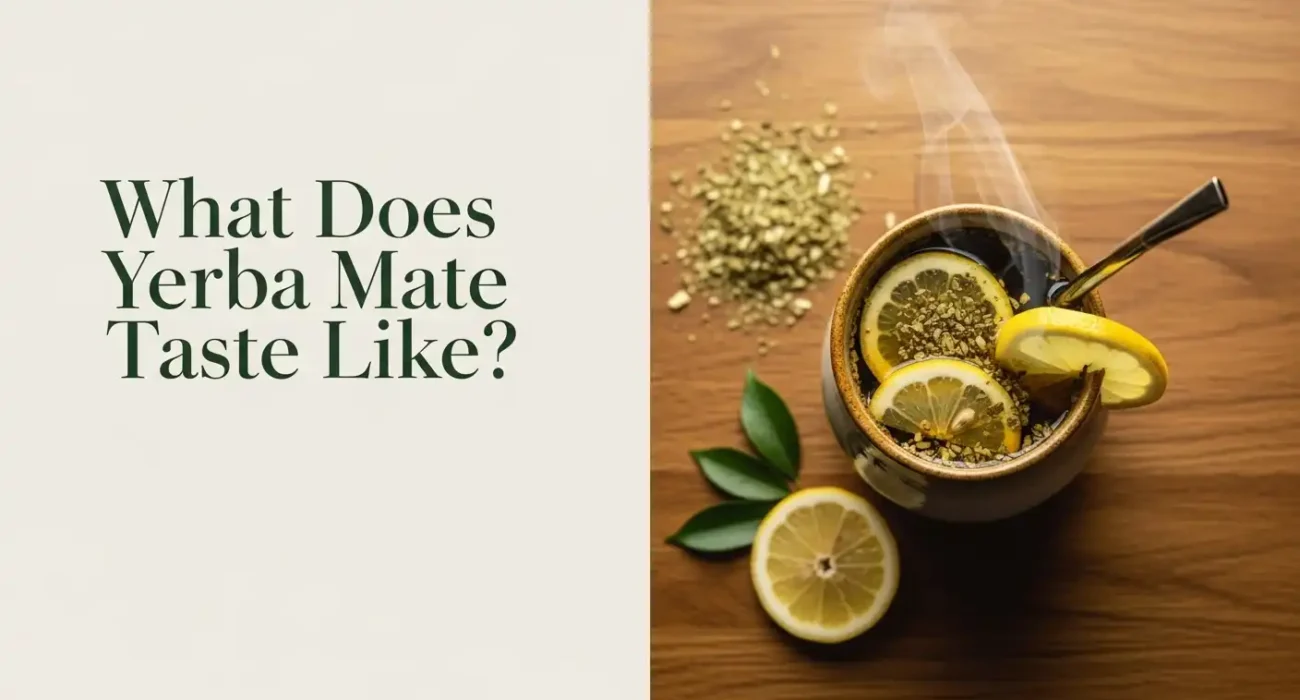
Lemon yerba mate is the most accessible version for new drinkers and the one where the flavour transformation is most dramatic and positive. The citrus note from natural lemon cuts through the bitterness cleanly, adds a bright, refreshing quality to the cup, and frames the earthy base in a way that makes it immediately enjoyable rather than an acquired taste. The natural vitamin C from the lemon also enhances the absorption of the polyphenols in the tea, making the nutritional profile of the cup more complete than either ingredient delivers independently.
Mate Vitality’s Yerba Mate and Lemon 20g Taster is the most practical way to experience the lemon version for the first time. It includes a bombilla straw spoon and comes with a 14-day taste guarantee so there is zero financial risk in finding out whether the flavour works for you. Most people who start with the lemon blend find they enjoy it from the first cup without any adjustment period.
Commercially flavoured canned yerba mate tends to be heavily sweetened with added sugar or artificial sweeteners and bears little resemblance to genuine loose leaf yerba mate in flavour or nutritional profile. If your only experience of yerba mate has been through a canned supermarket version, loose leaf brewed traditionally through a bombilla is a completely different and considerably better experience.
How to Make Yerba Mate Taste Better
If your first cup of plain yerba mate was not quite what you expected, a few simple adjustments make a significant difference.
Lower your water temperature. The single most impactful change you can make is keeping water between 70 and 80 degrees Celsius. Over-hot water over-extracts the bitter compounds and makes the cup far harsher than it needs to be. A thermometer or a kettle with temperature control solves this immediately.
Use less leaf for your first few cups. A heaped tablespoon rather than a full gourd or cup of leaf produces a milder, more manageable first impression. As your palate adjusts you can gradually increase the amount.
Start with the lemon version before moving to plain. The citrus note makes the flavour significantly more accessible and is the most effective way to introduce your palate to yerba mate without the full intensity of the plain version on the first encounter.
Let the first pour be small. The initial pour from fresh leaves is the strongest and most bitter. A small first pour followed by a refill produces a smoother, better-balanced cup for new drinkers.
The Yerba Mate and Lemon 150g bag provides roughly thirty cups, which is enough to give the flavour a genuine chance to become familiar and enjoyable as part of a daily habit. For anyone wanting to understand the full preparation process and brewing approach, the Mate Vitality about page covers the philosophy behind the blend in detail. Any questions about flavour, preparation, or which product is the right starting point can be answered directly through the contact page.
Frequently Asked Questions
What does yerba mate taste like?
Yerba mate has an earthy, robust, slightly bitter and grassy flavour with a dry, astringent finish. Plain traditional versions can also have a smoky quality from the wood-fire drying process. The lemon version is considerably more approachable with a bright citrus note that lifts and balances the earthy base, making it a genuinely refreshing drink that most new drinkers enjoy from the first cup without an adjustment period.
What does a yerba mate taste like compared to coffee?
Yerba mate does not taste like coffee. The bitterness in coffee comes from roasting. The bitterness in yerba mate is vegetal and herbaceous. The two drinks share caffeine content and a similar functional role in a daily energy routine but the flavour profile is completely different. People who dislike coffee specifically for its roasted flavour often find yerba mate a more enjoyable alternative.
Does yerba mate taste like matcha?
No. Matcha has a distinctive umami sweetness and a thick, creamy texture from being a powdered leaf suspension. Yerba mate is a clear herbal infusion with an earthy, bitter, grassy character. The two drinks both support clean energy and focus but taste nothing alike.
Does yerba mate taste like green tea?
Closer than coffee but still meaningfully different. Both have vegetal, grassy characteristics and some bitterness. Yerba mate is considerably more intense, full-bodied, and robust than green tea. Green tea is delicate and subtle. Yerba mate is earthy and assertive. If you enjoy green tea, yerba mate is a natural progression toward something stronger and more energising.
Why does yerba mate taste like cigarettes?
This flavour note is specific to smoke-dried traditional yerba mate, which is dried over wood fires during production. The smokiness can be reminiscent of tobacco to new drinkers. Unsmoked and lemon-blended versions do not have this quality at all. Mate Vitality’s lemon blend uses an unsmoked base specifically to avoid this flavour note and produce a clean, bright, citrus-forward cup that is much more accessible for first-time drinkers.
How do I make yerba mate taste better?
The most effective changes are lowering your water temperature to 70 to 80 degrees Celsius, using slightly less leaf than you think you need, and starting with a lemon blend rather than plain yerba mate. These three adjustments eliminate the most common reasons for an unexpectedly harsh first cup and produce a genuinely enjoyable drink from the second or third attempt at the latest.