

How Much Caffeine Is in Yerba Mate? The Complete Honest Answer

If you have ever wondered exactly how much caffeine is in yerba mate, you are not alone. It is one of the most searched questions about the drink and one of the most inconsistently answered.
Some sources say it is stronger than coffee. Others say it is weaker. Some list figures that apply to canned supermarket versions rather than genuine loose leaf tea. The confusion is understandable because the caffeine content of yerba mate genuinely varies depending on how it is prepared, how much leaf is used, and what form you are drinking it in.
This is the complete, honest breakdown. Exact numbers, real comparisons, and a clear explanation of why the caffeine experience from yerba mate feels different from every other source of caffeine you have tried.
Yerba Mate Caffeine Content: The Exact Numbers
A standard cup of loose leaf yerba mate brewed traditionally contains approximately 70 to 90mg of caffeine per 250ml serving. This figure assumes a typical preparation using around 8 to 10 grams of loose leaf yerba mate with water at 75 to 80 degrees Celsius.
The range exists because several variables affect the final caffeine amount in the cup:
- Leaf quantity — more leaf means more caffeine. Traditional South American preparation uses a generous amount of leaf which sits toward the higher end of the range.
- Water temperature — hotter water extracts caffeine more aggressively. Keeping water below boiling, around 75 to 80 degrees, produces a smoother extraction and is the recommended method for loose leaf yerba mate.
- Brew time and refills — the same leaves can be refilled three to five times. The first pour is the highest in caffeine. Each refill delivers progressively less as the leaf is gradually spent.
- Leaf to stem ratio — yerba mate blends vary in how much stem versus leaf they contain. Higher leaf content means higher caffeine per gram.
For loose leaf yerba mate prepared correctly at home, 75 to 85mg per cup is the most accurate working figure for most people.
Yerba Mate Caffeine vs Coffee: The Direct Comparison
This is the comparison most people want first and the answer is closer than most people expect.
| Drink | Caffeine per 250ml |
|---|---|
| Espresso (single shot 30ml) | 60 to 80mg |
| Filter coffee | 80 to 120mg |
| Instant coffee | 60 to 90mg |
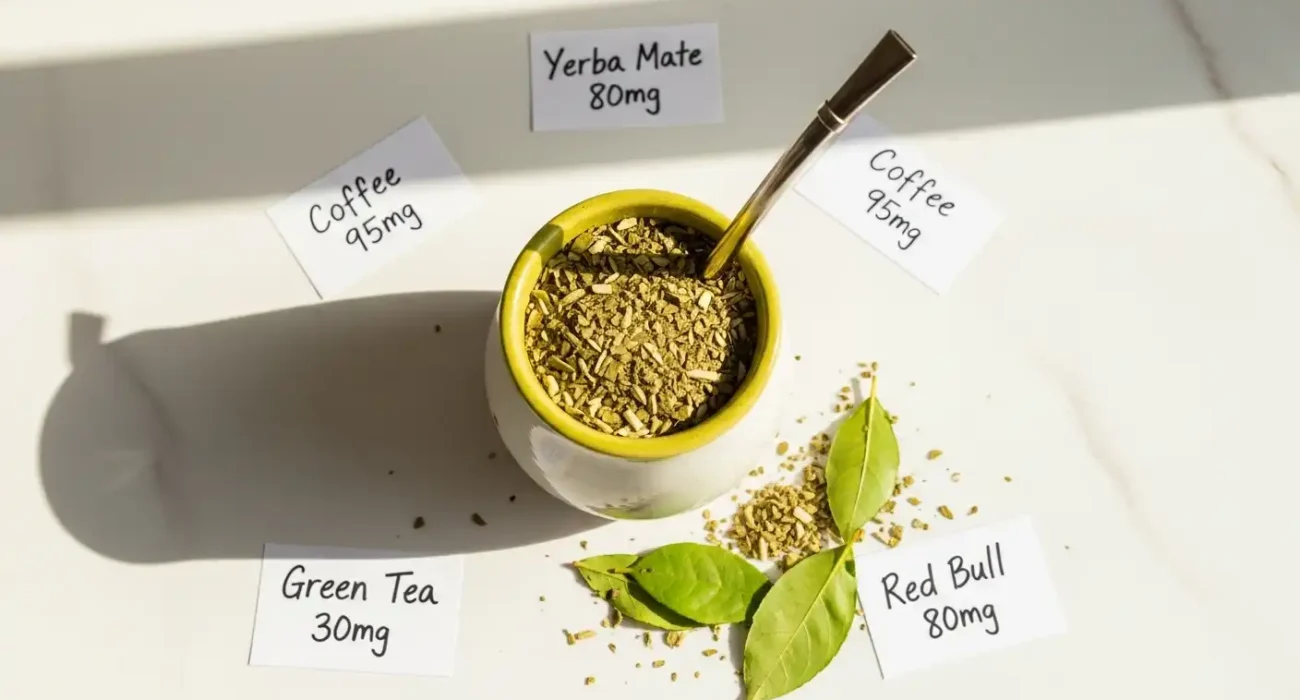
| Yerba mate loose leaf | 70 to 90mg |
| Canned yerba mate drinks | 50 to 80mg |
| Green tea | 25 to 40mg |
| Black tea | 40 to 70mg |
| Red Bull 250ml | 80mg |
| Monster 500ml | 160mg |
Loose leaf yerba mate sits in the same caffeine band as a standard filter coffee or instant coffee. It contains more caffeine than green tea, black tea, and most canned yerba mate products, and broadly similar caffeine to a Red Bull can volume for volume.
The critical difference is not the amount of caffeine. It is what surrounds that caffeine in the yerba mate plant that makes the experience feel completely different from coffee or an energy drink, and that distinction matters far more than the milligram number alone.
Why Yerba Mate Caffeine Feels Different From Coffee
The caffeine in yerba mate does not exist in isolation. Inside the Ilex paraguariensis plant, caffeine sits alongside theobromine and theophylline, two additional xanthine compounds that fundamentally change how the caffeine is absorbed and experienced.
Theobromine, the same compound found in dark chocolate, dilates blood vessels and improves circulation. This produces a smoother, more distributed energy that rises gradually rather than spiking abruptly. It also extends the duration of the energy curve, which is why most yerba mate drinkers experience three to five hours of sustained energy from a single cup rather than the sharp one to two hour peak that coffee produces.
Theophylline relaxes smooth muscle tissue including the airways, contributing to a sense of physical ease and calm alongside the alertness. This is part of why yerba mate does not produce the tight, pressured feeling that high-dose coffee can create in sensitive individuals.
The polyphenols present in the plant further moderate the stimulation by supporting stable blood glucose throughout the energy window. Stable blood glucose means no sharp decline at the end of the caffeine effect, which is the primary cause of the crash that coffee and energy drinks produce.
The result is a caffeine experience that most people describe as clean, smooth, and physically comfortable. Alert without anxious. Energised without wired. This is not marketing language. It is the documented pharmacological outcome of consuming caffeine alongside theobromine and theophylline rather than as an isolated compound.
Research published in the Journal of Food Science has confirmed that the xanthine alkaloid profile of yerba mate produces a distinct stimulant effect measurably different from coffee in terms of duration, cardiovascular response, and subjective experience ratings.
How Long Does Yerba Mate Caffeine Last
The caffeine effect from a well-prepared cup of yerba mate typically lasts three to five hours before declining gradually. This is meaningfully longer than the two to three hour window most people experience from coffee and considerably more sustained than the sharp rise and fall of a canned energy drink.
The extended duration comes directly from the theobromine content. Where anhydrous caffeine, the isolated industrial form used in most energy drinks, hits the bloodstream quickly and clears quickly, the natural caffeine in yerba mate paired with theobromine produces a flatter, wider curve that sustains performance across a longer window before fading gently.
For practical daily use this means one cup of loose leaf yerba mate in the morning or mid-morning is typically sufficient to carry energy and focus through to early afternoon without a second cup. This is one of the most common observations from people who make the switch from multiple daily coffees to one or two cups of yerba mate.
Yerba Mate Caffeine vs Green Tea and Black Tea
Green tea contains approximately 25 to 40mg of caffeine per 250ml cup, which is roughly half the caffeine of loose leaf yerba mate. Black tea sits between 40 and 70mg depending on steeping time and variety.
Both green and black tea also contain L-theanine, an amino acid that produces a calm, focused mental state by increasing alpha brain wave activity. This is the compound responsible for the quiet, settled focus that green tea drinkers describe.
Yerba mate does not contain L-theanine but achieves a similar smoothing effect through theobromine by a different mechanism. The practical difference is that green tea’s focus effect is more internally directed and mentally calm while yerba mate’s energy is more physically expansive and sustained over a longer window. Neither is superior. They produce different outcomes suited to different needs within the same day.
For anyone who finds green tea too mild for their daily energy requirements but wants to avoid the harshness of strong coffee, yerba mate sits precisely in the right position between the two. The caffeine level is meaningful, the experience is smooth, and the duration covers a full morning or afternoon comfortably.
Caffeine in Loose Leaf Yerba Mate vs Canned Drinks
This is an important distinction that many people overlook when researching yerba mate caffeine content.
Canned yerba mate drinks, the kind found in supermarkets and health food stores, typically contain 50 to 80mg of caffeine per 250ml can. However these products vary enormously in quality. Many use yerba mate extract rather than genuine brewed loose leaf, which produces a different compound profile even at a similar caffeine level. Added sugar, flavourings, and preservatives in canned versions further dilute the clean nutritional profile that makes loose leaf yerba mate genuinely worth drinking.
Loose leaf yerba mate brewed traditionally through a bombilla straw delivers the full spectrum of active compounds including theobromine, polyphenols, saponins, vitamins, and minerals alongside the caffeine. Canned versions deliver caffeine and very little else of nutritional significance.
The caffeine numbers may be similar on paper. The actual drink in the cup is not the same product and the experience reflects that difference clearly.
Mate Vitality’s loose leaf yerba mate with lemon is prepared as a genuine whole-plant drink through a bombilla, which means every cup delivers the complete compound profile responsible for the clean, sustained energy that loose leaf yerba mate is known for. The 20g taster with bombilla straw is the most practical way to experience the difference firsthand before committing to a larger supply.
How Much Caffeine Is Safe to Consume Daily
The European Food Safety Authority and NHS guidance both identify 400mg of caffeine per day as the safe upper limit for healthy adults. Pregnant women are advised to keep total caffeine intake below 200mg per day.
At 70 to 90mg per cup, one to two cups of yerba mate per day sits comfortably within safe limits for the majority of healthy adults with significant headroom for other caffeinated drinks throughout the day. Three cups would deliver 210 to 270mg, still within the recommended daily limit for most people.
The practical guidance for anyone new to yerba mate is to start with one cup per day in the morning or early afternoon, observe how your body responds over the first week, and adjust from there. Most people find one cup is sufficient for the energy effect they are looking for given the extended duration of the theobromine-moderated caffeine.
Is Caffeine-Free Yerba Mate Available
Yes, decaffeinated yerba mate does exist, though it is significantly less common than the standard caffeinated version and the decaffeination process removes some of the other beneficial compounds alongside the caffeine.
For anyone who is highly caffeine sensitive or who wants to drink yerba mate in the evening without affecting sleep, the more practical approach is to adjust timing rather than switch to a decaffeinated version. Because the caffeine in yerba mate is moderated by theobromine and metabolised more gradually than isolated caffeine, many people who are sensitive to coffee find they tolerate yerba mate considerably better at similar caffeine levels.
The general recommendation is to avoid any caffeinated drink including yerba mate within six hours of your intended sleep time. For most people this means cutting off at early afternoon for an 11pm bedtime, which aligns naturally with the energy window yerba mate is most useful for anyway.
If you have any questions about whether yerba mate suits your specific caffeine tolerance or daily routine, the Mate Vitality contact page is the fastest way to get a direct answer from the team. The 150g bag is the most practical daily supply for anyone ready to make loose leaf yerba mate a consistent part of their routine.
You can read more about the sourcing and preparation philosophy behind the blend on the Mate Vitality about page.
Frequently Asked Questions
How much caffeine is in yerba mate?
A standard cup of loose leaf yerba mate brewed traditionally contains approximately 70 to 90mg of caffeine per 250ml serving. This places it in the same caffeine band as a standard filter or instant coffee and meaningfully higher than green or black tea. The exact amount varies based on the quantity of leaf used, water temperature, and how many refills are poured from the same leaves.
Does yerba mate have more caffeine than coffee?
Not significantly. Loose leaf yerba mate contains 70 to 90mg of caffeine per cup compared to 80 to 120mg in a standard filter coffee. The two drinks sit in a similar caffeine range, but the experience of yerba mate caffeine feels meaningfully smoother and longer lasting because theobromine and theophylline in the plant moderate the stimulation in a way that coffee does not replicate.
How does yerba mate caffeine compare to Red Bull?
A standard 250ml Red Bull contains 80mg of caffeine, which is comparable to a cup of loose leaf yerba mate at 70 to 90mg. However the caffeine in Red Bull is anhydrous caffeine, an industrially extracted powder that delivers a sharper, shorter stimulant effect. Yerba mate caffeine is natural plant caffeine paired with theobromine, producing a smoother, longer energy curve with no artificial ingredients, no sugar, and no synthetic compounds of any kind.
How long does the caffeine in yerba mate last?
The energy effect from a cup of yerba mate typically lasts three to five hours before declining gradually. This is longer than most coffee drinkers experience from a single cup and considerably more sustained than a canned energy drink. The extended duration comes from theobromine, which smooths and extends the caffeine curve rather than allowing it to peak and drop sharply.
Does yerba mate caffeine cause jitters or anxiety?
Most people find that yerba mate does not produce the jitteriness or anxiety that the same amount of caffeine from coffee or energy drinks can cause. The theobromine component actively moderates the stimulant effect, producing a calmer physiological response at similar caffeine levels. Individuals who are highly sensitive to caffeine in general may still experience some sensitivity to yerba mate, in which case starting with a smaller serving and observing the response is the sensible first step.
Is yerba mate caffeine free?
Decaffeinated versions exist but are uncommon. Standard loose leaf yerba mate contains 70 to 90mg of caffeine per cup and is not a caffeine-free drink. For those wanting to reduce caffeine intake, adjusting the quantity of leaf used or reducing the number of daily cups is the most practical approach while retaining the full nutritional benefit of the plant.