

Yerba Mate vs Matcha: Which One Is Actually Better for You?

Two green drinks. Both with devoted followings. Both marketed as cleaner, smarter alternatives to coffee. Both sitting in the same section of every health food shop in the country.
If you have ever stood between a bag of ceremonial matcha and a pouch of yerba mate wondering which one is actually worth your money, you are not alone. The comparison comes up constantly and the honest answer is more nuanced than most people expect.
This is a straightforward, science-backed look at how the two drinks compare across energy, focus, antioxidants, taste, anxiety and weight management. No brand bias, no oversimplification. Just a clear picture of what each drink does so you can make the right choice for your lifestyle.
What You Are Actually Comparing
Before getting into the head to head, it helps to understand what each drink actually is because they come from very different places.
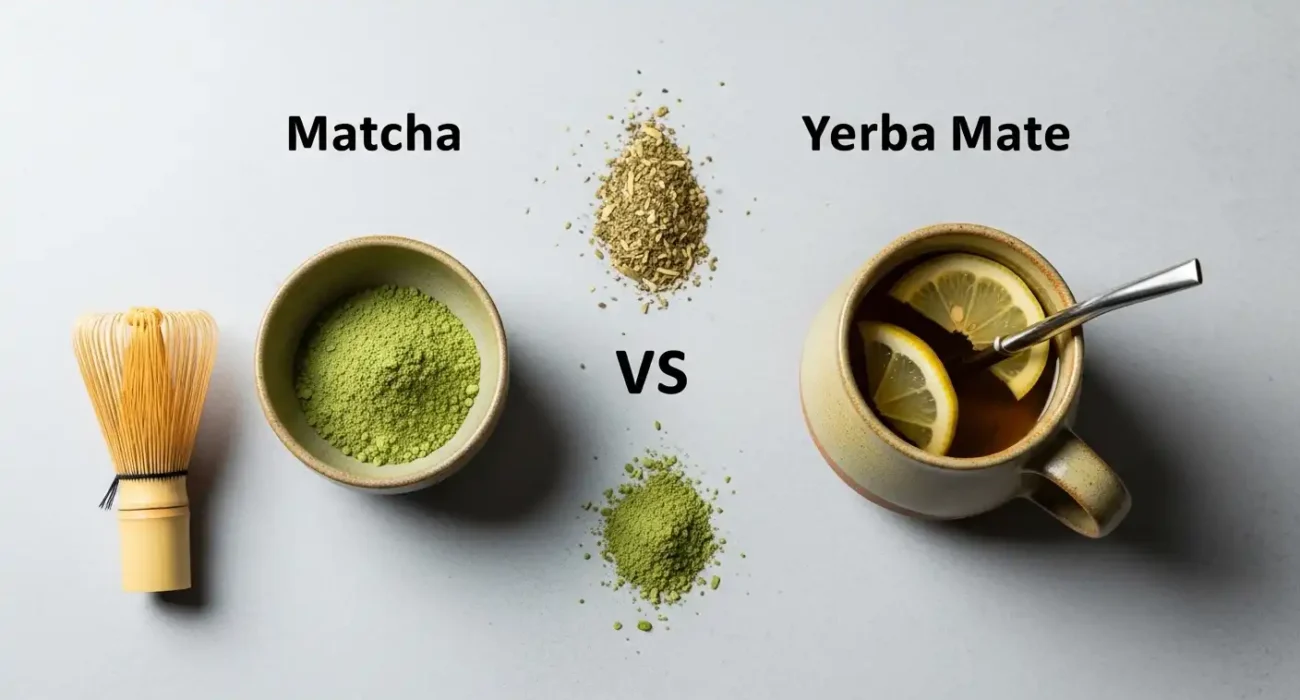
Matcha is a powdered green tea made from specially shade-grown leaves of the Camellia sinensis plant, the same plant used to make standard green tea. The leaves are ground into a fine powder and whisked into hot water rather than steeped and removed. Because you consume the entire leaf rather than just the infusion, matcha delivers a more concentrated dose of its nutrients than standard green tea.
Yerba mate comes from Ilex paraguariensis, a completely different plant native to the rainforests of South America. The leaves and stems are dried, sometimes over a wood fire, and brewed as a loose leaf drink traditionally consumed through a metal filter straw called a bombilla. Unlike matcha, yerba mate has been the daily drink of choice for entire populations across Argentina, Uruguay, Paraguay and Brazil for centuries. It is not a wellness trend. It is a deeply embedded cultural staple that the rest of the world is only now discovering.
Both are genuinely natural. Both contain caffeine. And both produce markedly different experiences in the cup. The differences are where things get interesting.
Yerba Mate vs Matcha Caffeine Content
Caffeine is usually the first thing people want to compare and the numbers do tell part of the story, though not all of it.
A standard cup of matcha contains roughly 50 to 70mg of caffeine depending on the grade and amount used. Ceremonial grade matcha, which is the highest quality and the type you want if you are drinking it for the experience rather than just the caffeine, sits toward the higher end of that range.
Yerba mate delivers approximately 70 to 90mg of caffeine per cup depending on how much leaf is used and how long it is brewed. On a straight caffeine comparison, yerba mate comes out slightly higher.
But the caffeine number alone is not the whole picture for either drink. What matters as much as the amount is what surrounds it.
Matcha’s caffeine is moderated by L-theanine, an amino acid that produces a calm, focused mental state. L-theanine is widely studied for its ability to smooth the stimulation from caffeine, reduce the jitteriness that high doses can produce, and extend the focus effect without extending the anxious edge. The combination of caffeine and L-theanine in matcha is what produces the zen, settled focus that matcha drinkers describe.
Yerba mate contains theobromine and theophylline alongside its caffeine. Theobromine, the same compound found in dark chocolate, dilates blood vessels, improves circulation, and produces a longer, smoother energy curve. The result is a more physical, expansive energy compared to the quiet mental focus of matcha. Alert, motivated, and clear without the sharpness that straight caffeine delivers.
Both modulate their caffeine intelligently. They just do it differently and produce different outcomes, which matters when you are choosing based on what your day actually requires.
Matcha vs Yerba Mate Energy: Which Lasts Longer
For sustained physical energy across a long day, yerba mate has the edge. The theobromine component produces a stimulation that most drinkers find lasts three to five hours with a gradual, natural decline rather than a drop. People who switch from coffee to yerba mate consistently report that the afternoon crash they were used to simply stops happening.
Matcha produces a shorter but exceptionally clean cognitive window. The L-theanine and caffeine combination creates a focused, calm state that is particularly well suited to concentrated mental work, meditation, study, or anything requiring steady attention over one to three hours. The experience is more contained and more specifically directed at the mind rather than the whole body.
The practical question is what you are trying to get through. A long, varied day with physical demands and shifting tasks is where yerba mate tends to outperform. A focused block of mental work or creative concentration is where matcha is hard to beat.
For anyone building a daily energy routine and looking for something that works from morning through to mid-afternoon without a second or third cup, yerba mate with lemon is the more practical daily driver. The 150g bag gives you roughly thirty cups, which at one or two cups a day represents a genuine daily habit rather than an occasional ritual.
Yerba Mate vs Matcha for Focus
Both drinks support focus. They just support different types of it and understanding the distinction helps you choose the right cup for the right moment.
Matcha’s focus effect is narrow and directed. The L-theanine raises alpha brain wave activity, which is associated with a relaxed but alert mental state. Practitioners of meditation and mindfulness often favour matcha precisely because it sharpens attention without adding mental noise. It is a quiet, internal kind of focus.
Yerba mate’s focus effect is broader. It improves mental clarity and reaction time while also raising physical energy and motivation. The theobromine keeps the body engaged while the caffeine keeps the mind sharp. Most people find it produces the kind of focus that works across multiple tasks rather than deep concentration on one.
For anxiety specifically, matcha holds a genuine advantage for people who are sensitive to stimulants. The L-theanine actively counteracts the anxious component of caffeine in a way that theobromine does not quite replicate. If caffeine tends to make you feel wired or anxious rather than focused, matcha is likely to sit better with your system than any caffeine source including yerba mate.
That said, yerba mate produces considerably less anxiety than coffee for most people and the lemon version in particular is a bright, refreshing experience that most new drinkers find very easy to tolerate. If you are curious about trying it, the 20g taster with bombilla straw is the lowest risk way to find out how your body responds before committing to anything larger.
Yerba Mate vs Matcha Antioxidants
Both drinks have strong antioxidant profiles and both are legitimately good choices from a nutritional standpoint. The comparison here comes down to the type of antioxidants rather than a clear winner.
Matcha is exceptionally high in EGCG, epigallocatechin gallate, a catechin that has been extensively studied for its effects on cardiovascular health, metabolic function, and cellular protection. Because you consume the entire powdered leaf, the EGCG concentration in matcha is meaningfully higher than in standard green tea.
Yerba mate contains a different antioxidant profile built around polyphenols, saponins, and chlorogenic acid. Saponins have anti-inflammatory properties and have been studied for their role in cholesterol management. Chlorogenic acid is associated with blood sugar regulation and fat metabolism. The polyphenol content of yerba mate is comparable to green tea and in some studies has been found to exceed it.
Neither drink dominates the other across the full antioxidant picture. They simply protect the body in different ways. If EGCG specifically is what you are looking for, matcha is the stronger source. If you want a broader anti-inflammatory and metabolic antioxidant profile, yerba mate covers that ground very effectively.
Mate Vitality’s lemon blend adds natural vitamin C from the lemon component, which works as an additional antioxidant and also enhances the absorption of the plant-based compounds already present in the yerba mate. It is a combination that makes the nutritional profile of the drink more complete than either ingredient delivers alone. You can read more about the thinking behind the blend on the Mate Vitality about page.
Yerba Mate vs Matcha Weight Loss
Weight management is one of the more commonly searched comparisons between these two drinks and both have genuine supporting evidence, though neither is a magic solution independent of diet and lifestyle.
Matcha supports weight management primarily through its EGCG content, which has been shown in clinical studies to increase fat oxidation during exercise and modestly boost metabolic rate at rest. The caffeine and L-theanine combination also supports sustained exercise performance, which indirectly supports caloric expenditure.
Yerba mate has a more directly studied relationship with appetite and metabolism. Research has identified that the saponins and caffeine in yerba mate influence GLP-1 activity, a hormone involved in appetite regulation and satiety signalling. Studies have also shown that yerba mate consumption is associated with reduced fat cell formation and improved insulin sensitivity in ways that go beyond simple caffeine metabolism.
For someone specifically focused on weight management as a goal, yerba mate has the more targeted and directly studied mechanism. For general metabolic support as part of a broader wellness routine, both drinks contribute meaningfully and there is no reason you cannot include both in your diet depending on what each cup is doing for you that day.
Yerba Mate vs Matcha Taste
This is where personal preference takes over entirely and no comparison can make the decision for you.
Matcha has a distinctive flavour that is grassy, slightly bitter, and umami-forward. High quality ceremonial matcha is smooth and complex with a natural sweetness underneath the bitterness. Lower grade matcha can taste chalky or harsh. The texture is thicker and creamier than any infused tea because it is a suspension of powdered leaf rather than a clear liquid.
Yerba mate has an earthy, robust, slightly smoky character in its traditional form. The plain version is an acquired taste that some people love immediately and others find too strong at first. The lemon version is considerably more approachable, with the citrus note lifting the flavour significantly and creating something that is bright, refreshing and distinctively its own rather than just a softened version of plain mate.
Both drinks are genuinely unique. Neither tastes like green tea, neither tastes like coffee, and neither tastes like each other. The best way to know which works for you is to try both properly rather than forming an opinion based on a description.
Which One Should You Choose
The honest answer is that they serve different purposes and the right choice depends on what you are asking the drink to do.
Choose matcha if your primary need is calm, directed mental focus for concentrated work, you are sensitive to stimulants and need the anxiety-buffering effect of L-theanine, or you are specifically looking for the highest possible EGCG concentration for antioxidant purposes.
Choose yerba mate if you want sustained energy that carries you across a full day rather than a focused mental window, you are looking for a coffee replacement with a more physical and expansive lift, or you want a drink with a broad metabolic and anti-inflammatory nutritional profile that also happens to taste genuinely good.
For many people the answer is not either or. Matcha in a focused morning work session and yerba mate as a mid-morning or early afternoon energy drink is a combination that a growing number of health-conscious people are settling into as their daily routine.
If you are ready to find out which side of the comparison you land on, the Mate Vitality shop is the right starting point. And if you have questions before ordering, the contact page is the quickest way to get a straight answer.
Frequently Asked Questions
Is yerba mate better than matcha?
Neither is objectively better. They produce different outcomes and suit different needs. Yerba mate delivers more physical, sustained energy across a longer window and has a stronger studied relationship with appetite and metabolism. Matcha delivers a calmer, more focused cognitive effect with superior EGCG content and a stronger anxiety-buffering mechanism through L-theanine. The right choice depends entirely on what you are looking for from your daily drink.
Which is healthier, yerba mate or matcha?
Both are genuinely healthy drinks with strong nutritional profiles. Matcha is richer in EGCG catechins. Yerba mate has a broader polyphenol and saponin profile with more directly studied metabolic and appetite effects. Neither is definitively healthier than the other. They protect the body in different ways and both are excellent choices as part of a balanced lifestyle.
Should I drink yerba mate or matcha in the morning?
Both work well in the morning but for different reasons. Matcha suits a calm, focused start to the day where concentrated mental work is the priority. Yerba mate suits a more active morning where sustained energy across varied tasks is what you need. Many people who use both drinks choose based on what the day ahead actually requires rather than a fixed rule.
Does yerba mate have more caffeine than matcha?
Slightly, yes. Yerba mate typically delivers 70 to 90mg of caffeine per cup compared to matcha’s 50 to 70mg depending on grade and preparation. However the caffeine experience from each drink feels quite different because of the other compounds present. Matcha’s L-theanine creates a calmer effect while yerba mate’s theobromine creates a longer, more expansive energy curve.
Can you drink both yerba mate and matcha?
Absolutely. Many people include both in their daily routine and use each for different purposes. The key consideration is total caffeine intake across the day. If you are having a cup of each plus other caffeinated drinks, keeping track of your total daily caffeine consumption is sensible, particularly in relation to sleep quality.